
The Known Variants of The Legend of Zelda (NES): A Collector's Reference
Circle vs oval Seal of Quality, 5-screw vs 3-screw, and why two Zelda copies can sit on completely different rungs of the tape.
Few NES titles have as deep a variant tree as the original Legend of Zelda — and that complexity is exactly why identical-looking copies can sell for wildly different prices. Here's a breakdown of the documented production variants and what separates them.
Why Zelda Has So Many Variants
Zelda launched in 1987, during a stretch when Nintendo was actively changing cartridge construction, seal design, and packaging — sometimes multiple times within a single game's production run. Every change left a physical fingerprint on the cartridge, box, or manual, which collectors now use to date and rank copies. The game's technical ID is NES-ZL-USA, a North American release developed in Japan.
The Seal of Quality Progression
The most important variant marker is the Seal of Quality (SoQ) printed on the box — and it changed three times across the NES lifecycle.
Circle SoQ was the first Seal of Quality used on NES packaging, marketed by Nintendo as a guarantee that the product met its design and production standards. Oval SoQ with a trademark symbol (TM) came second, followed by Oval SoQ with a copyright symbol (R) as the third version.
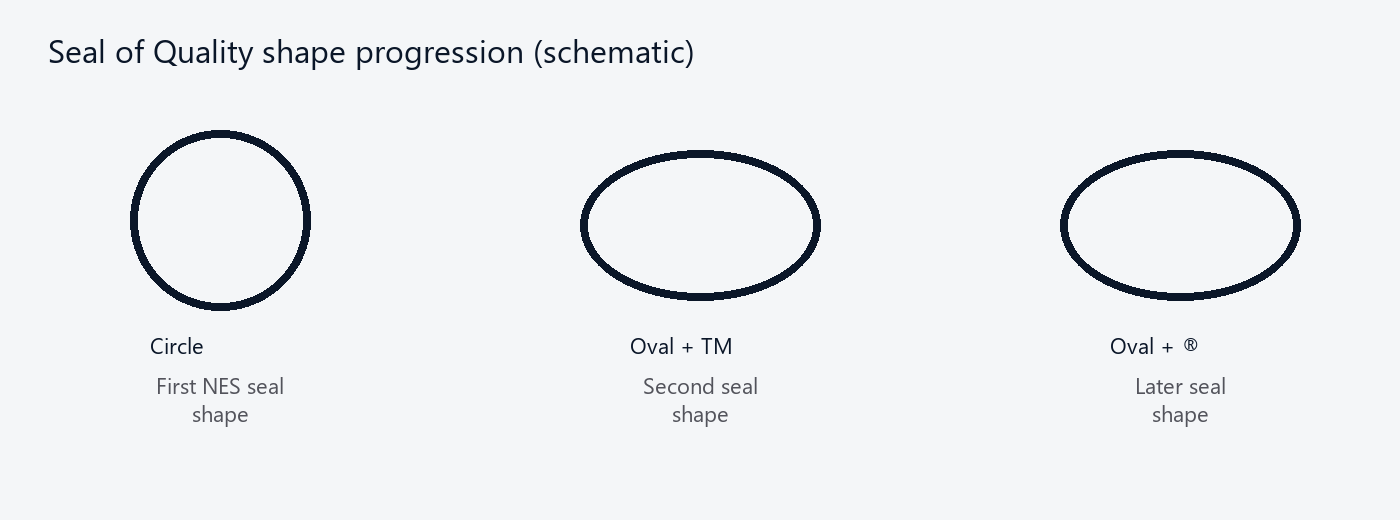
Shape only — not a reproduction of Nintendo's Seal of Quality artwork. Circle came first, then oval with TM, then oval with ®.
For Zelda specifically, documented cartridge and box variants progress from 5-screw and 3-screw Circle SOQ versions through several "no ID Code" revisions, eventually reaching Oval TM SOQ and Oval R SOQ versions carrying the NES-ZL-USA code and REV-A markings.
Screw Count: 5-Screw vs. 3-Screw
Rev-A is the notation Nintendo added to most NES boxes and cartridges after switching from a five-screw cartridge design to a three-screw design. Earlier 5-screw Zelda cartridges predate this switch, making them scarcer than the 3-screw copies that followed. This same 5-to-3-screw transition shows up across other early NES titles, but Zelda's is especially well documented due to collector demand.
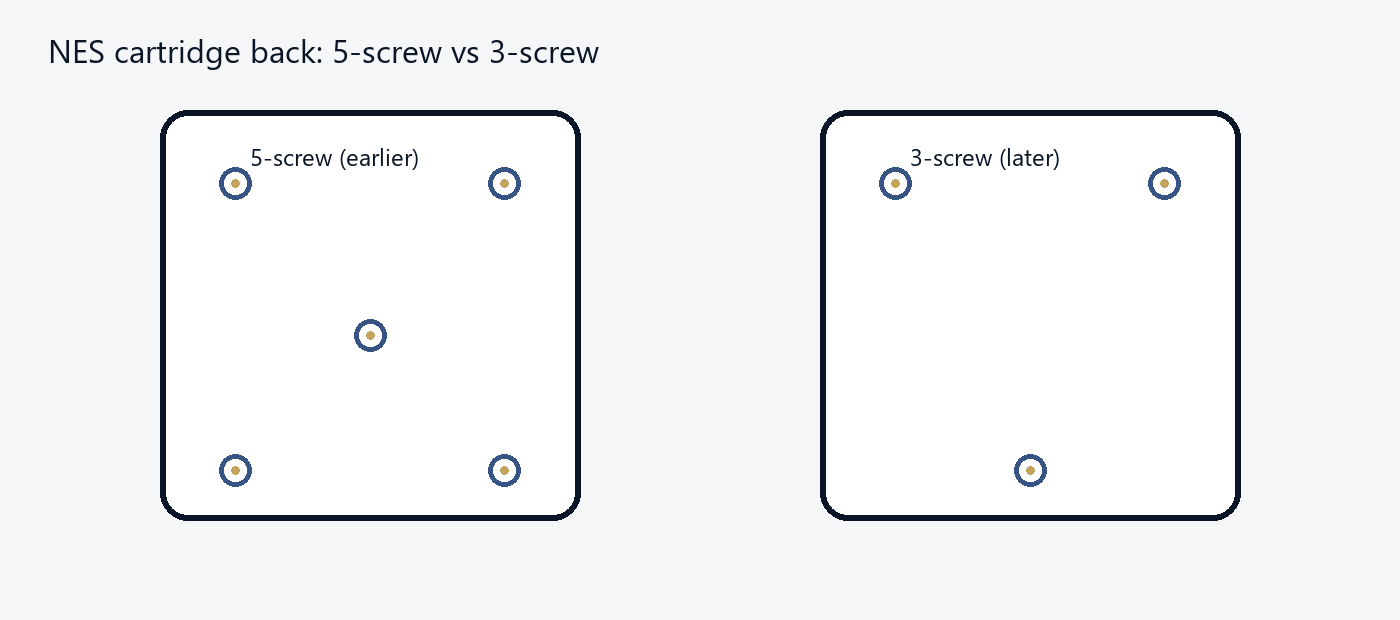
Cartridge-back screw layout. Earlier NES carts use five screws; later production uses three.
Made in Japan (MiJ) Markings
Some Zelda cartridge revisions carry a "Made in Japan" notation, others don't. Documented variants split between no-MiJ and MiJ versions within the same Circle SOQ, NES R production stage before the design moved to REV-A. This marking is a smaller detail than seal type or screw count, but it's part of what CGC and other graders log when authenticating a specific production stage.
The Rarest Known Copy
The variant hierarchy isn't just academic — it drives real auction outcomes. A Round SOQ, Rev-A, mid-production sealed copy graded 9.6 by WATA sold for $384,000 at Heritage Auctions, the single highest-graded copy of the game known with its original round seal. That copy came from a production run believed to date to 1987, though only a single copy from the very first production run is known to still exist.
At the other end of the spectrum, common variants still carry real value: a CGC-certified Oval SoQ (R) copy sold for nearly $6,000 — a reminder that even "later" Zelda variants are far from worthless, just priced on a different tier than the early Circle SOQ copies.
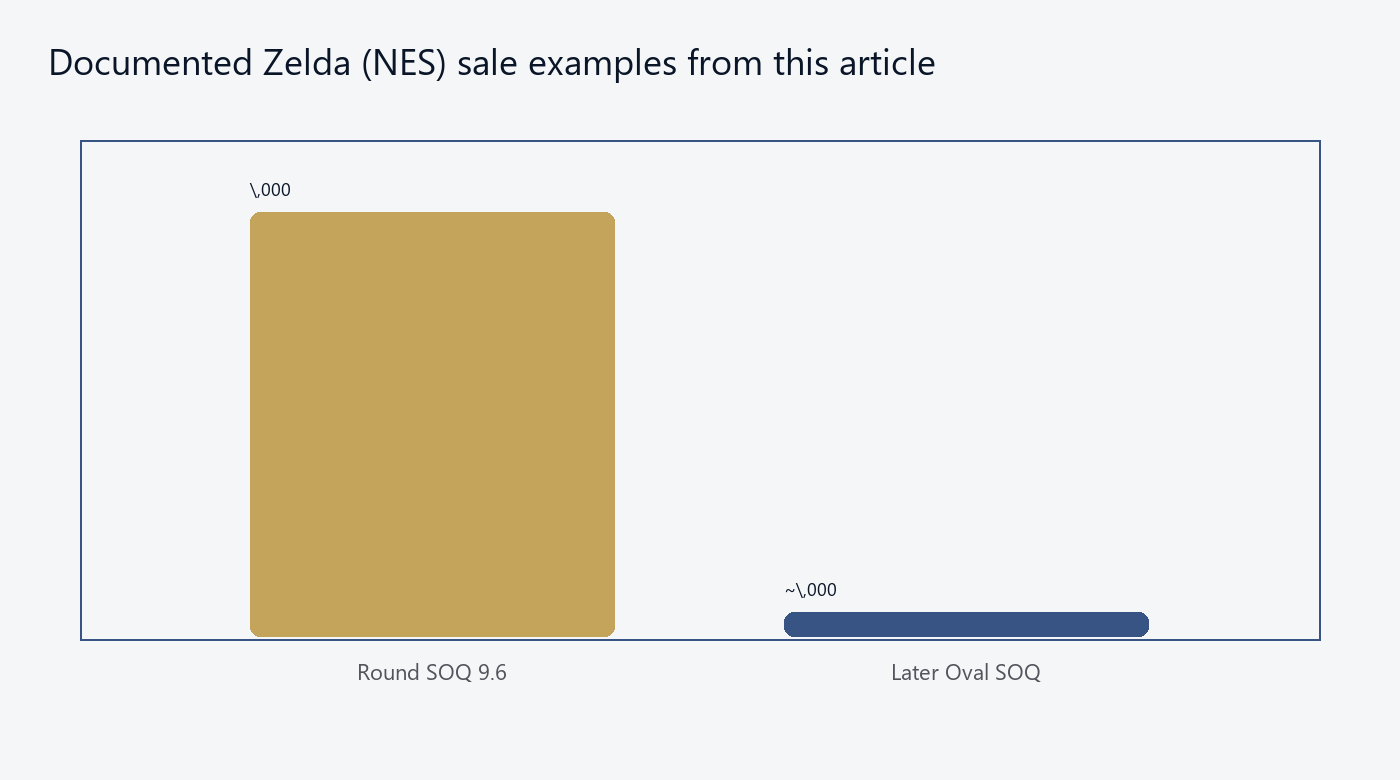
Two documented sale examples from this article, not a complete price guide. Check joined comps for the copy in front of you.
Box, Cartridge, and Manual Don't Always Match
One detail that trips up new collectors: box, cartridge, and manual variants don't always progress in lockstep. As seen with other NES titles from this era, a single game can have a box variant paired with an earlier or later cartridge and manual variant than expected — meaning a "matching" complete-in-box copy (same variant stage across all three components) is its own collectible tier, separate from mismatched but still authentic combinations.
What This Means When You're Buying
Before paying a premium for a Zelda copy, confirm:
- Seal type (Circle SOQ vs. Oval TM vs. Oval R)
- Screw count (5-screw vs. 3-screw)
- REV-A markings and MiJ notation
- Whether box, cartridge, and manual variants match each other
Two visually similar copies can sit on completely different rungs of the value ladder. The only way to know which one you're holding — or bidding on — is checking the specific variant markers against documented production data and comparable sale history.
The catalog row is the title, not each seal. On Rarity Ledger the NES release is one match you confirm, and the item page shows auction lots joined to that title. Seal type, screw count, and whether the box matches the cart still have to be read off the copy before two sales count as the same thing. Buy It Now prices on auction sites, including eBay, are part of that tape. Retail and dealer shop prices are not.
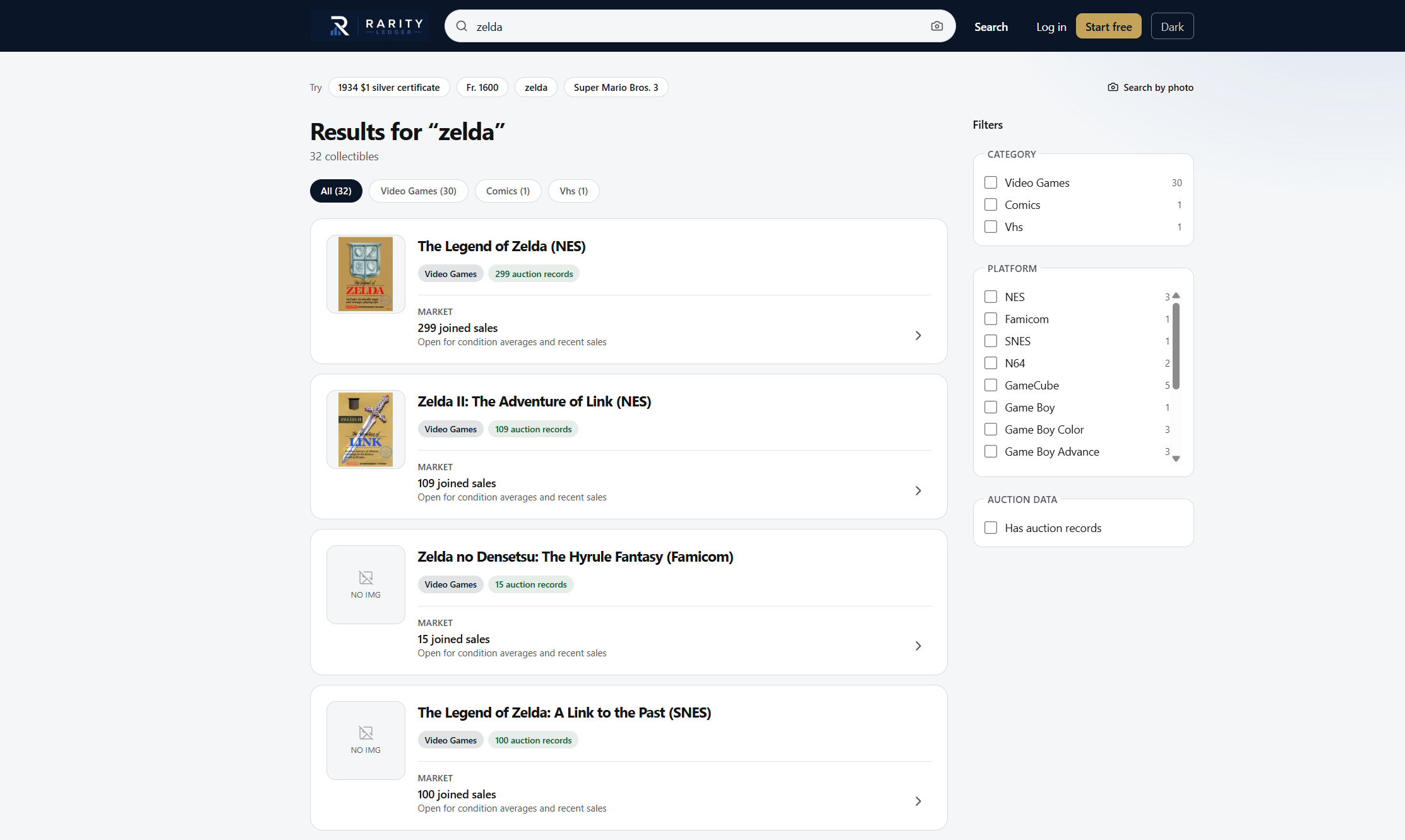
Search for Zelda. Each row is a catalog match, with a count of joined sales.
Image credits
Diagrams, the variant-price chart, and the product screenshot are original to Rarity Ledger. Nintendo trademarks remain the property of their owners; the seal diagram shows shapes only.