
The Collector's Guide to Vintage NES Games: What Actually Drives Value in 2026
Print run, condition, variants, and the tape — not nostalgia — decide what an NES cartridge is worth.
The Nintendo Entertainment System didn't just save the video game industry after the 1983 crash — it created the modern collectibles market for games. Cartridges that sold for $30-50 in the 1980s now trade for thousands, and a handful for six figures. But most NES collectors overpay or underpay because they're guessing at value instead of reading the data. Here's what actually matters.
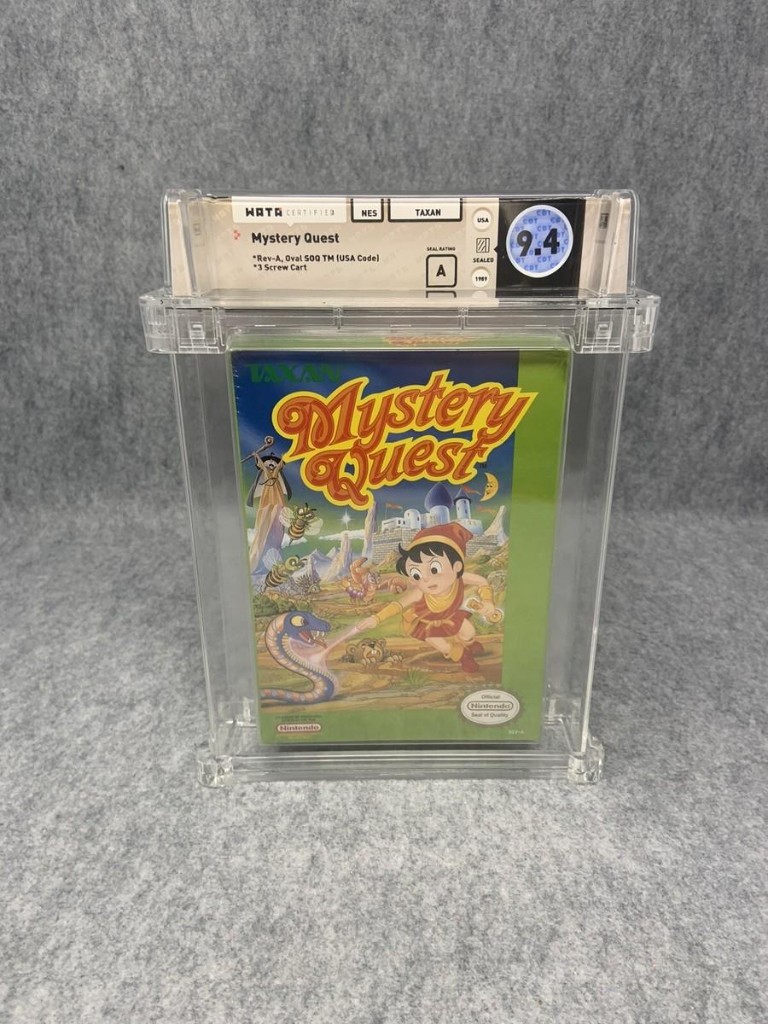
A sealed Mystery Quest in a grading slab. Photograph from the Rarity Ledger marketing set.
Why NES Games Became Collectible
Three forces built this market: nostalgia (the generation that grew up with the NES now has disposable income), scarcity (many early titles had small print runs before Nintendo understood demand), and the sealed/graded boom, where companies like WATA and VGA began authenticating and grading cartridges the way PSA grades trading cards. Once games could be objectively graded and tracked, they became a real asset class — not just a garage-sale curiosity.
The Four Factors That Drive NES Value
-
Rarity of the print run. Early "black box" era titles (1985-1987) generally had smaller print runs than mid-to-late NES releases. Games like Stadium Events or early Bandai licensed titles are scarce because of low production or later recalls — not just age.
-
Condition and grading. Loose cartridges, complete-in-box (CIB), and factory-sealed copies occupy entirely different price tiers — often 10-50x apart for the same title. Grading scales differ by company: VGA uses a 100-point scale, while newer entrants align closer to the 10-point systems used in coins and cards. A seal that looks "mint" to the naked eye can still grade lower due to crimping, yellowing, or warping invisible without close inspection.
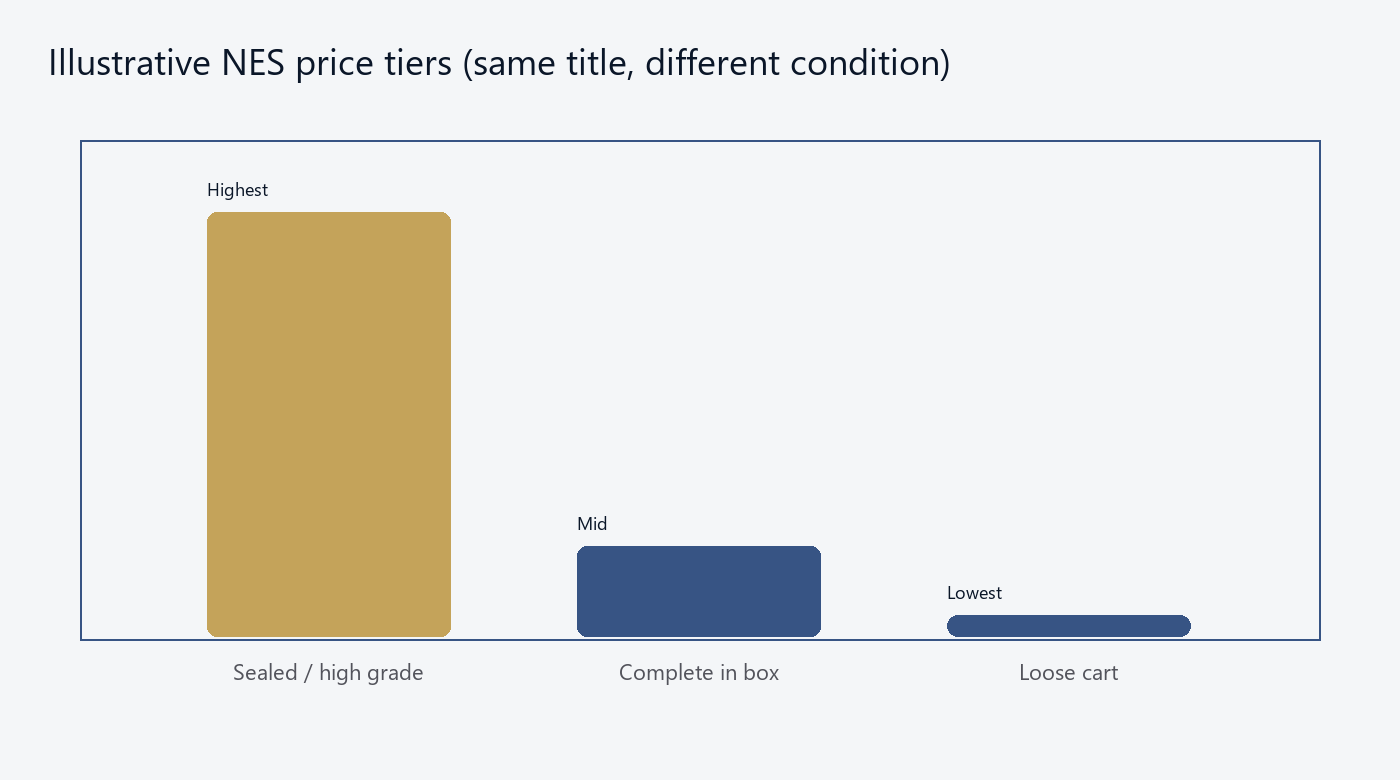
Illustrative spread: sealed/high-grade copies, complete-in-box, and loose carts of the same title sit on different rungs. Not a price quote for any one game.
-
Variant and print differences. Label variations (round SOQ vs. oval seal, Rev-A vs. later revisions), regional differences, and rare misprints can separate an ordinary copy from a five-figure one. Collectors chase these details the same way currency collectors chase mint marks or die varieties. The Legend of Zelda is the worked example: seal, screws, and REV-A.
-
Cultural and competitive significance. Games tied to a "holy grail" narrative — first-print Mega Man, Little Samson, Bubble Bath Babes — carry premiums beyond pure scarcity because of collector demand and story value, not just supply.
Reading Auction Data the Right Way
Anyone can look up "what did this game sell for." The mistake is treating one sale as the market. A single auction result can be skewed by a bidding war, a bad grading call, or a seller with two buyers who both wanted it badly that day. What matters is the trendline: how has this specific title, in this specific grade tier, moved over the last 12-24 months across multiple auction houses — not just one marketplace.
This is where most collectors get stuck. Auction data lives scattered across dozens of houses, each formatting listings differently, using different grading language, and updating on its own schedule. Pulling a real price history means normalizing all of that into one comparable record. On Rarity Ledger that record is a catalog match you confirm — search or a photo — and then the auction lots joined to that ID. Buy It Now prices on auction sites, including eBay, are included. Retail and dealer shop prices are not. If a grade tier has no comps, the page does not invent them.
Building a Collection With Intention
Whether you're chasing a specific holy grail or building a themed run (first-party Nintendo titles, a complete black-box set, a regional variant collection), the collectors who do well over time share one habit: they check population reports and price history before they buy, not after.
Before your next purchase, ask:
- How many copies exist at this grade, based on population data?
- How has this exact grade tier traded over the last two years?
- Is this variant common or one of the scarcer print runs?
That's the difference between collecting and speculating.
Image credits
Charts are original to Rarity Ledger. The graded Mystery Quest photograph is from the Rarity Ledger marketing set.