
How Much Is a 1934 Silver Certificate Worth?
A 1934 date is not a price. Denomination, series letter, stars, Hawaii issues, and condition all move the tape.
If you have a 1934 Silver Certificate, you probably want to know one thing:
How much is it worth?
The short answer is: it depends.
A circulated 1934 $1 Silver Certificate can be a fairly modest collectible, while a scarce variety, star note, unusual serial number, error, or exceptionally well-preserved example can be worth considerably more.
And 1934 Silver Certificates aren't all the same.
There are different denominations, series letters, varieties, signature combinations, star notes, and wartime issues. Condition can also make a dramatic difference.
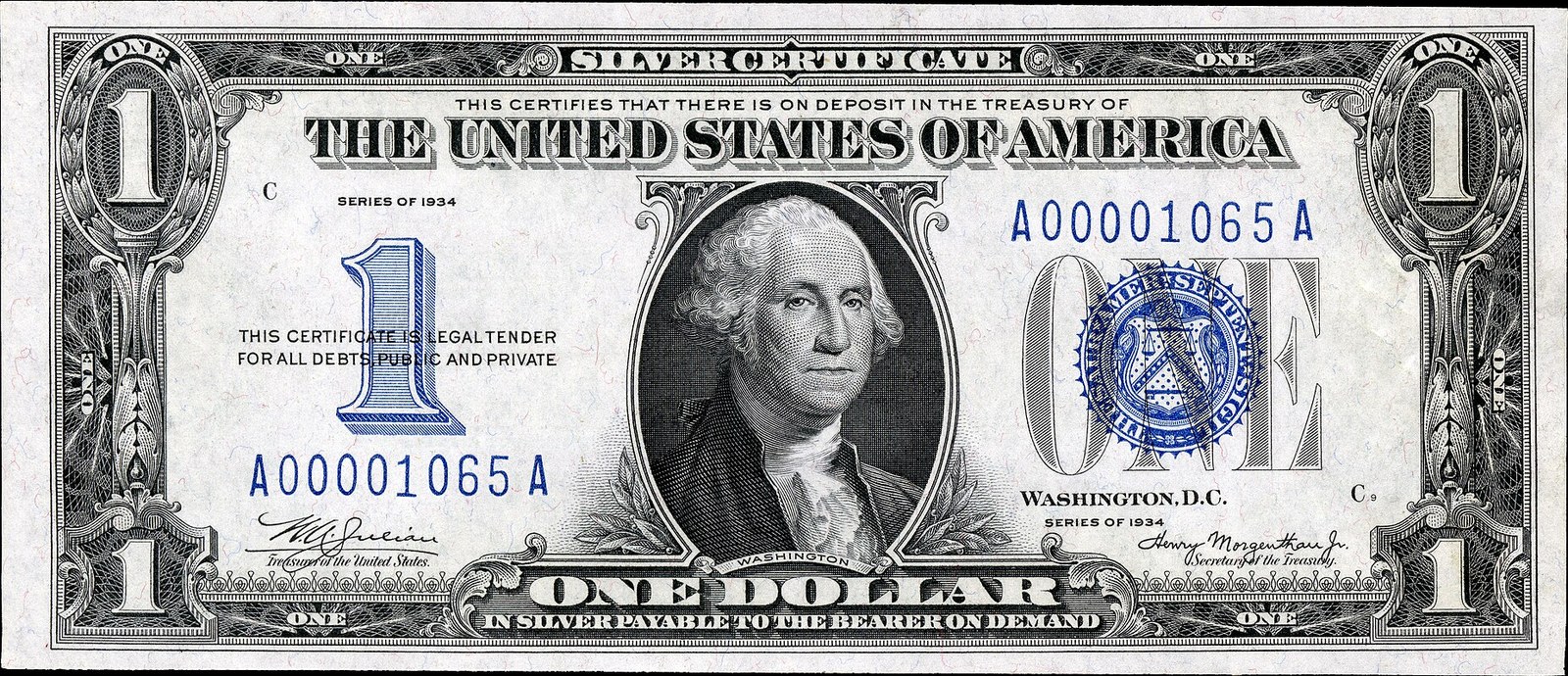
Series of 1934 $1 Silver Certificate. Public domain, National Numismatic Collection.
So if you found a 1934 Silver Certificate in an old collection, wallet, safe, or inherited box of paper money, don't value it based on the date alone.
Identify the exact note first. Then look at what comparable examples have actually sold for.
The 1934 Silver Certificate at a Glance
The 1934 series is part of the transition to the smaller-size U.S. currency format introduced in the late 1920s.
Unlike the large, elaborate Silver Certificates of the late 1800s, a 1934 Silver Certificate looks much more familiar.
The typical note has:
- A blue Treasury seal
- Blue serial numbers
- A small-size format
- A series designation
- Treasury signatures
- The words “Silver Certificate”
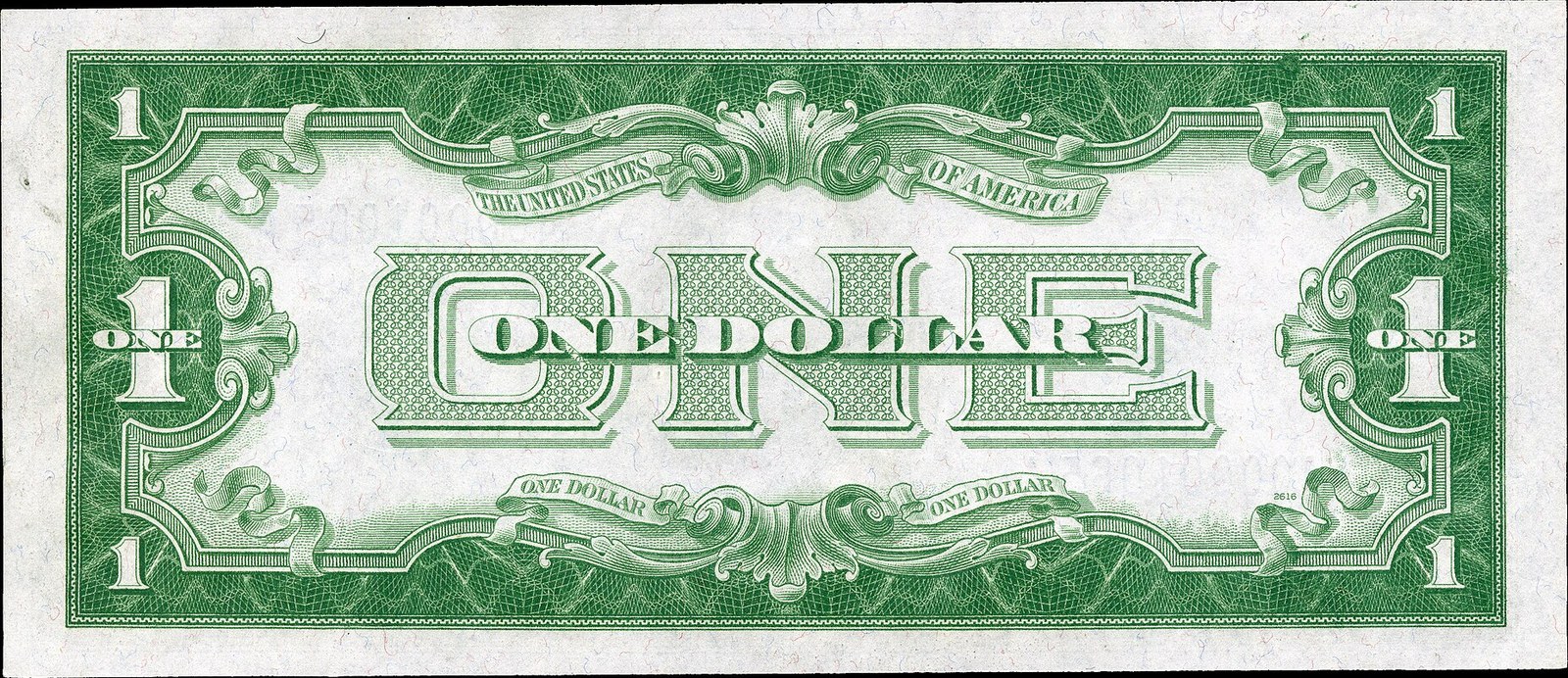
The Bureau of Engraving and Printing records Silver Certificates as a major part of U.S. currency history, with production continuing from the first Silver Certificates in 1878 through the eventual discontinuation of the series in the 1960s.
But the words “1934 Silver Certificate” don't identify one single collectible.
That's where things get interesting.
How Much Is a 1934 $1 Silver Certificate Worth?
The 1934 $1 Silver Certificate is one of the most commonly encountered notes from this series.
A circulated example may have a relatively modest collector premium, while an exceptionally high-grade example can be worth substantially more.
For example, current 2026 auction listings show the difference that condition can make. A PCGS Gem 65 PPQ 1934 $1 is being offered with estimates around $325–$400, while a Superb Gem 67 PPQ example is estimated around $975–$1,175.
Those are auction estimates, not completed sale prices, which is an important distinction.
The lesson is more important than the individual numbers:
A 1934 $1 Silver Certificate can range from an inexpensive collectible to a substantially more valuable note depending on its condition and exact characteristics.
A circulated note should not be valued by comparing it to a Superb Gem example.
The 1934 $1 Silver Certificate: What to Look For
If you have a 1934 $1, start by looking at the details.
Record:
- Series
- Serial number
- Signature combination
- Star or regular note
- Condition
- Any unusual printing characteristics
One common catalog identification is Fr. 1606, the 1934 $1 Silver Certificate. Series letters are different notes: a plain 1935 $1 is Fr. 1607, not a 1934.
If you're researching your note online, a catalog number such as the Friedberg number can be extremely useful because it narrows the search to a specific type rather than simply searching for “1934 $1 Silver Certificate.” The broader history is USA Silver Certificates.
Condition Can Change the Value Dramatically
This is probably the biggest mistake people make when researching old paper money.
They find a 1934 Silver Certificate online selling for hundreds of dollars and assume their note must be worth the same.
Then they discover that the expensive example is graded Gem Uncirculated or Superb Gem, while their note has spent decades folded in a wallet.
Those are completely different collectibles.
Look at your note carefully.
Does it have folds?
A single fold can matter.
Multiple folds matter more.
A heavily circulated note with numerous creases is very different from a note that has never been folded.
Are the corners sharp?
Sharp corners can be an indication that the note has seen little circulation.
Rounded corners are common on circulated examples.
Is the paper bright and original?
Look for discoloration, stains, writing, or other damage.
Are there tears or pinholes?
These can significantly affect desirability.
Has the note been repaired?
Tape, glue, pressing, trimming, and other alterations can affect collectible value.
Don't try to improve an old note yourself.
Don't iron it.
Don't wash it.
Don't tape it.
Don't trim it.
What looks like an improvement can permanently reduce its value.
What Does “1934” Actually Mean?
Here's an important point:
The date on an old U.S. note isn't necessarily the year that particular piece of paper was printed.
The series designation identifies the series of currency, not necessarily the exact date the note came off the printing press.
That's why you may encounter:
- 1934
- 1934A
- 1934B
- 1934C
- 1934D
and other variations depending on denomination and type.
These aren't simply cosmetic differences.
For collectors, the series letter can identify a different cataloged variety.
So don't tell someone:
“It's a 1934.”
If possible, tell them exactly what the note says.
For example:
Series 1934
or
Series 1934D
That extra letter can matter.
What Is a 1934 Star Note?
Look at the serial number.
If you see a star symbol, you may have a replacement note.
The Bureau of Engraving and Printing explains that a star sheet was used to replace an imperfect sheet. Rather than reuse the original serial numbers, replacement notes received special serial numbers with a star.
Collectors call these star notes.
But don't make another common mistake:
A star does not automatically mean the note is rare.
The scarcity of a particular star-note variety depends on the specific issue.
That's why you need to identify the denomination, series, block, and other characteristics before deciding how unusual the note is.
What Is a 1934 $5 Silver Certificate Worth?
The 1934 $5 Silver Certificate (Fr. 1650) is another popular note.
It features Abraham Lincoln on the front and carries the familiar blue Silver Certificate seal.
Circulated examples can be relatively affordable collectibles.
Current retail listings show ordinary circulated 1934 $5 Silver Certificates being offered for roughly the tens of dollars, while higher-grade examples can move into the hundreds or more. Current auction listings also show specialized 1934 varieties and high-grade examples commanding significantly more.
One particularly interesting example is a 1934 $5 with an unusual “super radar” serial number—a highly repetitive serial-number pattern—which was recently estimated at $400–$600 in a specialized numismatic offering.
Again, that's an estimate, not a completed sale.
But it demonstrates an important point:
The note itself matters more than the year printed on it.
1934 $5 Silver Certificate Varieties
The $5 series becomes much more interesting when you start looking at varieties.
Collectors encounter examples identified as:
There are also different blocks and varieties.
Some 1934 $5 notes can be identified as wide varieties, for example.
PCGS records 1934C and 1934D $5 Silver Certificates as distinct cataloged varieties, including wide varieties.
This is why simply searching:
“1934 $5 Silver Certificate value”
can produce misleading results.
You may be comparing different notes.
What About a 1934 $10 Silver Certificate?
The 1934 $10 Silver Certificate (Fr. 1701) is another important collectible.
There are multiple varieties and series letters, including 1934, 1934A (Fr. 1702), 1934B (Fr. 1703), 1934C (Fr. 1704), and 1934D (Fr. 1705).
Star notes are also collected.
PCGS, for example, catalogs the 1934A $10 Silver Certificate star note as a distinct variety.
The difference between an ordinary note and a scarce variety can be substantial.
Current marketplace examples illustrate the spread: ordinary 1934 $10 Silver Certificates are offered at relatively modest prices in circulated condition, while 1934 $10 star notes can command considerably more depending on condition.
And exceptionally high-grade examples can go much higher.
A recent 1934 $10 Silver Certificate graded PCGS 67 PPQ Superb Gem New is documented in the marketplace, demonstrating the kind of high-grade example that collectors treat very differently from an ordinary circulated note.
1934 $10 Silver Certificate Star Notes
If you have a 1934 $10 and see a star, pay attention.
Star notes are replacement notes, but not every replacement note is equally scarce.
The specific catalog variety matters.
For example, PCGS identifies the 1934A $10 star note as Fr. 1702* and separately tracks its population by grade.
That kind of information is much more useful than simply knowing that “star notes are valuable.”
The real question is:
How scarce is this specific star-note variety, and what are comparable examples selling for?
What About a 1934 $20 Silver Certificate?
This is where careful identification becomes especially important.
The Silver Certificate program historically included higher denominations, but the denominations and issues available changed over time.
The Bureau of Engraving and Printing notes that legislation in 1900 limited Silver Certificates to denominations of $10 and under, although later legislation and wartime circumstances produced additional varieties and issues.
So if you believe you have a 1934 $20 Silver Certificate, don't immediately assume it is a standard 1934 blue-seal Silver Certificate.
You may have:
- A wartime emergency issue
- A Hawaii note
- Another type of U.S. currency
- A misidentified note
This is exactly why photographs and complete identification are so important.
If your note appears unusual, don't rely on the date alone.
1934 Silver Certificates and World War II
Some of the most interesting notes associated with the 1934 era are the special World War II emergency issues.
These include the famous Hawaii and North Africa issues. The $1 Hawaii overprint is a Series 1935A Silver Certificate, Fr. 2300, not a blue-seal 1934. The $1 North Africa issue is the yellow-seal Fr. 2306. A 1934A $5 North Africa Silver Certificate is Fr. 2307.
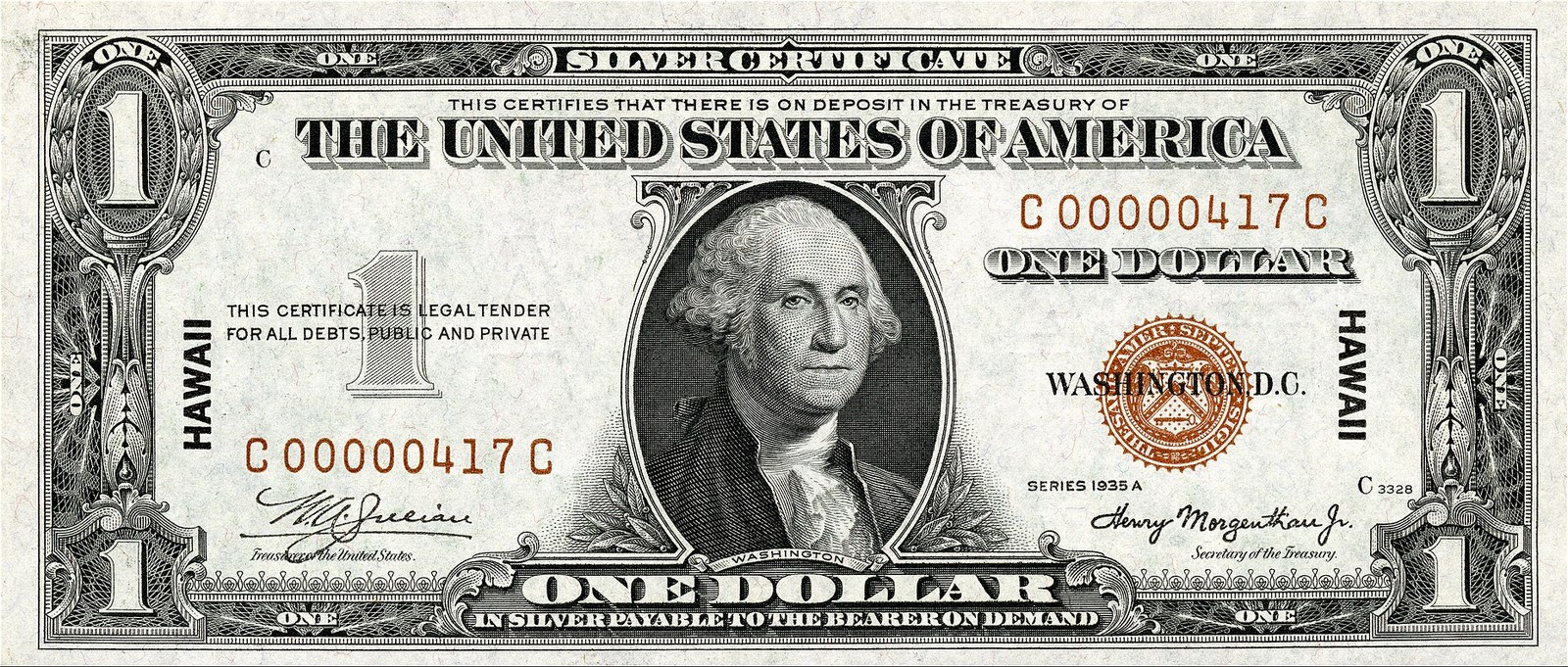
Hawaii overprint notes are a related wartime issue — identify the series before you price it.
These notes were designed to help protect U.S. currency in areas where enemy occupation or capture was a concern.
The distinctive markings made it possible for the government to invalidate the notes under certain circumstances.
North Africa issues were produced with distinctive yellow seals, while Hawaii notes have their own identifying characteristics.
PCGS records that 1934A $5 North Africa note as its own type, separate from the ordinary blue-seal 1934A.
If your “1934 Silver Certificate” doesn't look like the ordinary blue-seal examples you've seen online, stop and investigate.
You may have something considerably more interesting.
What About the 1934 Silver Certificate With a Weird Serial Number?
Serial numbers can add another layer of collectibility.
Look for patterns such as:
- Very low numbers
- Repeating digits
- Radar numbers
- Near-radar numbers
- Ladders
- Solid numbers
- Interesting sequences
For example:
12344321
reads the same forward and backward.
A serial number like:
11111111
is visually striking.
And a number like:
12345678
creates an obvious sequence.
But again:
Interesting does not automatically mean rare.
The collector market determines whether a particular serial-number pattern carries a meaningful premium.
And the condition of the note still matters.
Is a 1934 Silver Certificate Worth More Than Face Value?
Usually, yes—but how much more depends on the exact note.
A 1934 Silver Certificate is nearly a century old, so it has historical and numismatic interest.
But there were many millions of Silver Certificates produced, and some varieties are much more common than others.
The BEP's historical records show that Silver Certificate production over the entire program reached enormous numbers, particularly in the $1 denomination.
So don't assume:
“It's from 1934, therefore it must be worth hundreds.”
It might be.
It might not.
The only reliable way to narrow it down is to identify the specific note.
The Biggest Mistake: Comparing the Wrong Note
Imagine you have a worn 1934 $1 Silver Certificate.
You find an online listing for:
1934 $1 Silver Certificate — $1,000
You might think you've found a valuable note.
But then you discover the listing is for a Superb Gem 67 PPQ example.
Your note is heavily circulated.
That's not an apples-to-apples comparison.
The same problem happens when someone compares:
- Regular note vs. star note
- Common variety vs. scarce variety
- Circulated vs. uncirculated
- Raw vs. professionally graded
- Standard issue vs. error
- Ordinary serial number vs. collectible serial number
Matching the note correctly is the key to getting a useful value.
Don't Use the Highest Online Asking Price
This deserves its own warning.
Search for:
1934 Silver Certificate
and you can find notes offered for all kinds of prices.
That doesn't mean those are market values.
An asking price is what a seller wants.
A completed sale tells you what a buyer actually paid.
For example, current auction listings for high-grade 1934 $1 Silver Certificates can carry estimates ranging from several hundred dollars to over $1,000 depending on grade.
That doesn't mean every 1934 $1 is worth hundreds or thousands.
It means grade is a major variable. Compare a worn note with other worn notes of the same series letter, not with a Superb Gem asking price.
What Should You Look for on Your 1934 Silver Certificate?
Before trying to put a price on it, photograph these areas.
Front
Record:
- Denomination
- Series
- Treasury seal
- Serial number
- Signatures
Back
Look for:
- Design
- Printing characteristics
- Damage
- Writing
- Alterations
Serial Number
Record the entire number.
Look for:
- Star
- Repeating digits
- Sequences
- Low numbers
- Other unusual patterns
Condition
Look for:
- Folds
- Creases
- Tears
- Pinholes
- Stains
- Writing
- Repairs
- Sharp or rounded corners
This information can turn a vague question—
“How much is my 1934 Silver Certificate worth?”
—into a much more answerable one.
A Quick 1934 Silver Certificate Value Checklist
Use this checklist before researching your note.
1. What denomination is it?
$1, $5, $10, or another denomination?
2. What exactly does the series say?
1934? 1934A? 1934B? 1934C? 1934D?
3. Is it a regular note or a star note?
Look for the star next to the serial number.
4. What is the serial number?
Write down the entire number.
5. Is the serial number unusual?
Look for patterns.
6. What is the condition?
Circulated?
Very Fine?
Extremely Fine?
About Uncirculated?
Uncirculated?
Professionally graded?
7. Is it a special issue?
Check for Hawaii, North Africa, unusual seals, or other distinctive characteristics.
8. Is it an error?
If something looks unusual, investigate before assuming it's damage.
9. What are comparable notes actually selling for?
This is the final step.
Not what someone is asking.
What someone actually paid.
Should You Get Your 1934 Silver Certificate Graded?
Maybe.
Professional grading can make sense when:
- The note appears valuable
- The condition appears exceptional
- The variety is scarce
- You suspect an error
- You plan to sell it
- Authentication would add confidence
It may not make sense for a heavily circulated common example.
The Bureau of Engraving and Printing itself does not appraise old currency or estimate its numismatic value. It directs people interested in valuations toward dealers and numismatic references.
That makes the order of operations important:
Identify first.
Estimate the market value second.
Decide whether professional grading makes sense third.
Don't Clean Your 1934 Silver Certificate
If you think you've found a valuable note, leave it alone.
Paper money is not like a dirty household object that needs cleaning.
Do not:
- Wash it
- Iron it
- Bleach it
- Tape it
- Glue it
- Trim it
- Laminate it
- Write on it
Collectors care about originality.
An alteration can hurt the value of a note that otherwise might have been desirable.
If you're unsure what you're looking at, preserve it exactly as you found it.
So, What Is a 1934 Silver Certificate Worth?
Here's the honest answer:
There is no single value for a 1934 Silver Certificate.
A common circulated note can be a relatively affordable collectible.
A better-condition example can be worth considerably more.
A star note can command a premium.
A scarce variety can command more.
A remarkable serial number can attract collectors.
A genuine error can be worth substantially more.
And a superb, professionally graded example can bring prices that have little resemblance to the value of a worn example of the same basic design.
Recent marketplace examples illustrate this clearly: ordinary 1934 $5 Silver Certificates are offered at relatively modest prices, while high-grade or specialized examples can reach hundreds or more.
For 1934 $1 notes, current auction estimates range from several hundred dollars for Gem examples to around $1,000 or more for Superb Gem examples.
Those figures should not be treated as a universal price guide.
They're examples of why the exact note matters.
The Better Way to Value a 1934 Silver Certificate
The best place to start isn't with a price.
It's with identification.
Take a photograph.
Determine:
What is it?
Then determine:
How does it compare to other examples?
Then look at:
What have comparable examples actually sold for?
That process is much more reliable than searching for the highest price you can find online.
On Rarity Ledger the first step is the catalog match — search or a photo, which you confirm. The item page then shows auction lots joined to that ID, such as the 1934 $1, Fr. 1606. Buy It Now prices on auction sites, including eBay, are included. Retail and dealer shop prices are not. A missing comp stays missing.
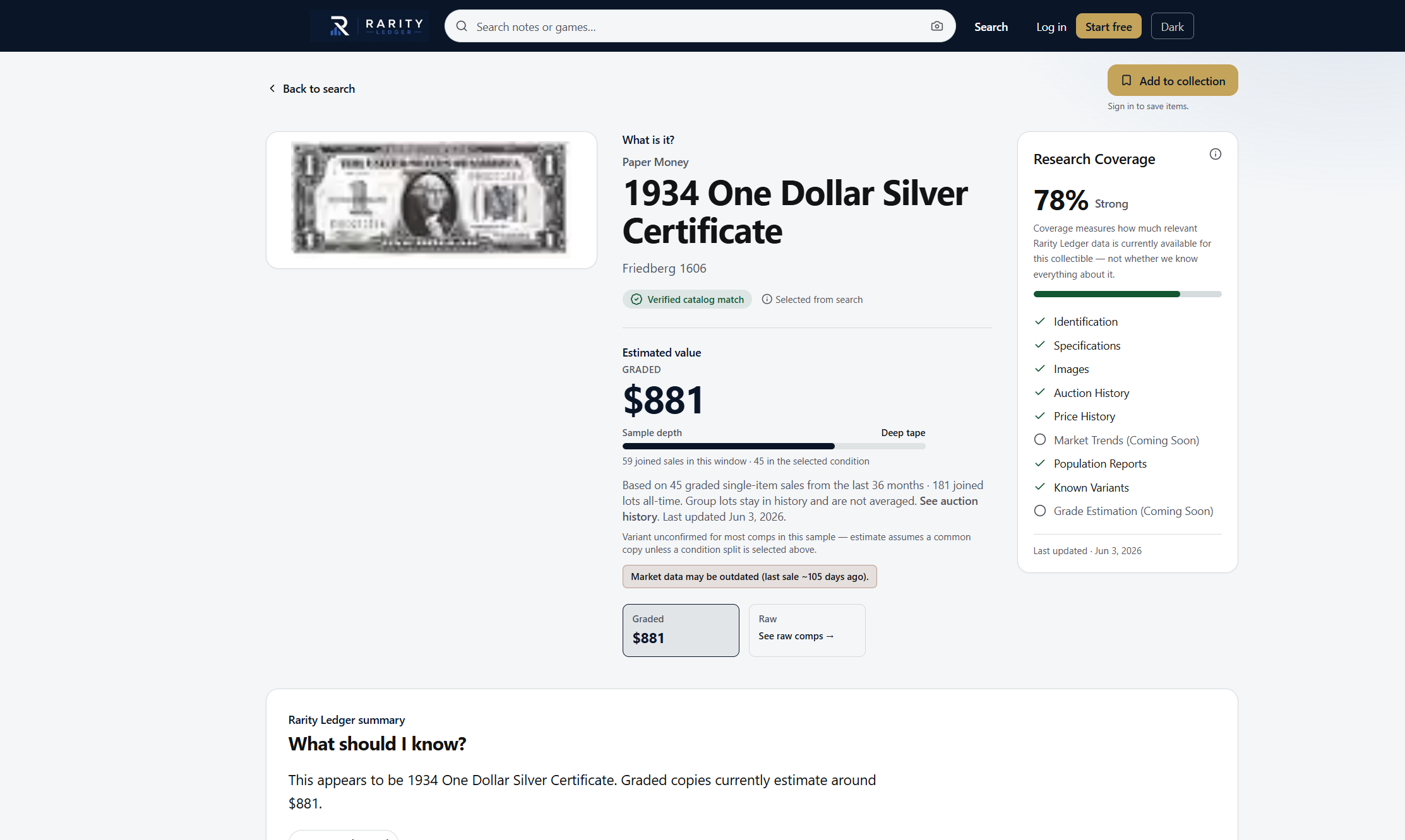
The item page for a Silver Certificate: the catalog identity, then joined auction sales.
A 1934 Silver Certificate may be a modest collectible, or it may be a star, a wartime issue, or a high-grade example. You will not know which until the note is identified.
Image credits
U.S. currency images are public-domain works of the United States government (Bureau of Engraving and Printing), reproduced from Wikimedia Commons and the National Numismatic Collection at the Smithsonian Institution. Product screenshots are original to Rarity Ledger.